Renting a Car in Morocco: Practical Guide for Drivers
Renting a car in Morocco: where to book, what insurance you need, road conditions, police checkpoints, fuel in the Atlas, medina parking and driving habits to know.
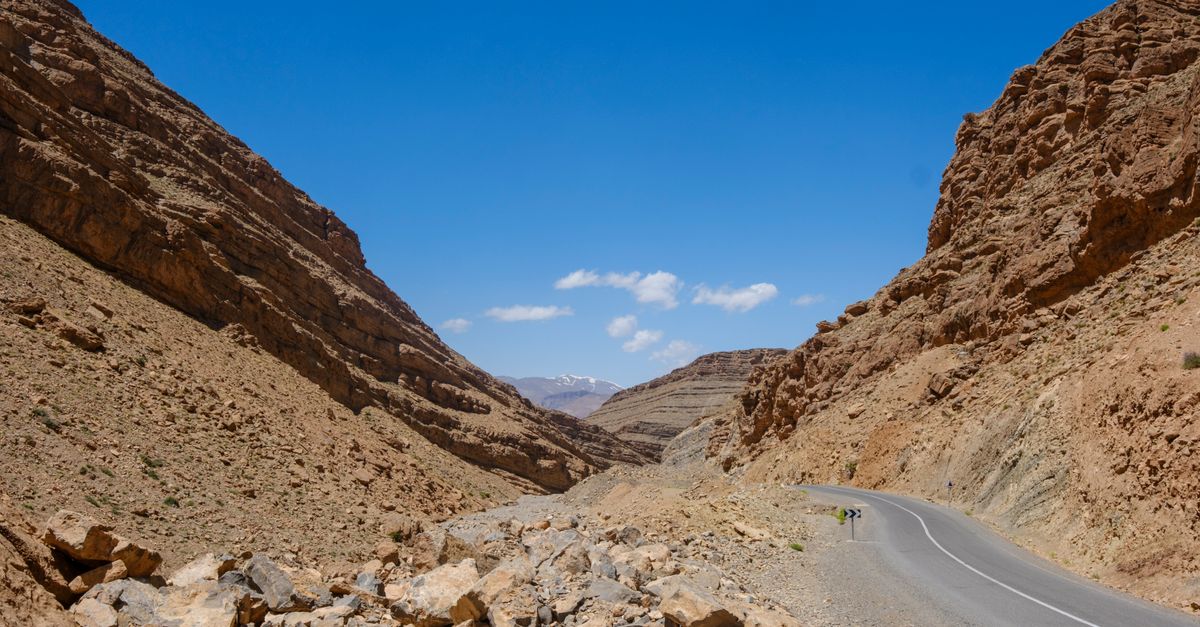
A rental car changes what Morocco is possible to see. The places worth the effort — the Ouzoud waterfalls, the Dadès valley, the beaches south of Agadir, the Saharan edge — are exactly where public transport does not reach. Leave Marrakech at dawn, stop for tea in an Atlas village at noon, sleep in Aït-Ben-Haddou that evening. That is the journey a car makes possible. Here is what you need to know before picking up the keys.
Where and how to rent
Both major international companies and local Moroccan agencies operate in Morocco. The most practical arrangement is to book the car in Morocco, not cross from Europe in a European rental. Most European rental contracts explicitly prohibit driving the car into Morocco — crossing with one is a contract violation that voids the insurance.
Cities with the best rental availability: Marrakech, Casablanca, Agadir and Fez, all with airport pick-up options. Book online in advance to lock in price and insurance terms before you arrive.
Compare rental car rates in Morocco
Insurance: take full cover
Do not economise on insurance in Morocco. Full comprehensive cover (zero or low excess) is worth the extra cost. Road surfaces vary and light damage from gravel, potholes or tight manoeuvring in a medina car park is common.
One detail that catches people out: roadside assistance is often a separate add-on, not included in the insurance package. If you plan routes through the Atlas, the Saharan south or secondary roads far from cities, ask about and add this before you sign.
Photograph the car at pickup — all panels, tyres and the fuel gauge. This protects you against disputed damage charges at return.
Documents to carry
- National EU driving licence — accepted by most suppliers
- International Driving Permit — not mandatory for Europeans but strongly recommended; some suppliers require it and it prevents any friction at police checkpoints
- Passport (or a copy)
- Rental contract and vehicle papers — check that the papers are in the glovebox at pickup
Age limits, credit card rules and IDP requirements vary a lot by market — our car rental requirements guide breaks down what to check before you book anywhere, not just in Morocco.
Road conditions
Morocco drives on the right. The main road network is better than many travellers expect.
Motorways (toll): The autoroutes connecting Casablanca, Rabat, Marrakech, Tangier and Fez are well-maintained, clearly signed and have regular rest areas. Tolls are paid in dirhams at booths — have small notes and coins ready. Card acceptance varies by toll plaza.
Secondary roads: This is where attention rises. A smooth road can narrow and deteriorate without warning. You share the tarmac with:
- mopeds and motorcycles that overtake unpredictably, often without lights at night
- donkey and mule carts, sometimes without any reflectors after dark
- pedestrians and livestock — sheep, goats — crossing at village edges
Drive defensively, slow down through villages and do not drive at night outside major cities. Night driving is the single biggest risk factor on Moroccan roads. Unmarked speed humps, unlit vehicles and animals on the road are all common after dark.
Speed limits and police checkpoints
| Zone | Limit |
|---|---|
| Villages and towns | 40–60 km/h |
| Regular roads | 100 km/h |
| Motorways | 120 km/h |
Police and gendarmerie checkpoints are frequent, particularly on tourist routes and at city entrances and exits. These are routine — you are waved through most of the time. Have your licence, permit and rental contract accessible. Fines for speeding are paid on the spot. Seat belt and mobile phone violations are the most common penalties: buckle up, put the phone down.
Speed cameras (mobile and fixed) are common, especially at village speed zones. For more on how the checkpoints actually play out and what’s legally required versus just asked for, see our guide to driving in Morocco.
Fuel: fill up before the Atlas and the desert
On main routes and around cities, fuel is not a problem. The calculation changes completely when heading into the High Atlas or south towards Merzouga or Zagora. Stations become rare, and some are out of stock or closed.
Three things to do:
- Fill the tank before leaving the last large city, even if it is half-full. On the Tizi n’Tichka pass towards Ouarzazate or in the Draa valley, do not gamble with the gauge.
- Carry cash (dirhams) for fuel — small rural stations often do not take cards.
- Check the fuel type at pickup. Diesel (gasoil) is the most common fuel type in Morocco. Using the wrong nozzle is an expensive and uninsured mistake.
Attendants fill the tank for you at most stations. A small tip in coins is customary.
Medina parking
The medinas of Marrakech, Fez, Essaouira and Chefchaouen are labyrinths of pedestrian lanes. Do not attempt to drive into them — you will end up wedged between a wall and a moped with no way to turn around.
The system that works:
- Park in a supervised car park near the city walls (in Marrakech, near the Koutoubia or in the new city; in Fez, near Bab Boujloud)
- Informal car attendants in high-visibility vests watch parked vehicles for a small daily fee in dirhams — this is the local custom and worth accepting
- Many riads manage parking or point you to a trusted attendant nearby; ask when booking your accommodation
Once the car is safe, visit the medina on foot. It is the only way to navigate it properly anyway.
Which car to choose
A compact or small car is right for city touring, the Atlantic coast route and the imperial cities (Marrakech, Fez, Rabat, Meknes). Easier to park, lower fuel consumption.
An SUV makes sense if your route takes in mountain passes, the edge of the desert or unpaved tracks. It gives ground clearance and confidence on rough surfaces. Read the rental contract carefully: most suppliers prohibit off-road use, so “piste” driving voids the insurance. Clarify what counts as off-road before you sign.
Driving habits to understand
Moroccan driving has its own logic. Reading it is better than fighting it.
- Roundabout priority follows the official give-way-to-the-left rule, but not everyone observes it consistently. Enter slowly and watch what others do before committing.
- Horn use is communication, not aggression. A short beep means “I am here” or “I am overtaking.” Do not take it personally.
- Flashing headlights usually means “I am coming through” rather than “go ahead.” If in doubt, let the other vehicle pass first.
- Mountain passes (particularly the Tizi n’Tichka on the Marrakech–Ouarzazate route) are a series of tight switchbacks. Sound the horn before blind corners and be prepared for buses and trucks that cross the centre line on bends.
Practical tips
- Download offline maps before you leave. Mobile coverage is patchy in the Atlas and near the desert. Google Maps and Maps.me both work well offline once the area is cached.
- Start drives early. The light is better, the heat is manageable and you reach your next stop before the afternoon.
- Keep the rental period realistic. Moroccan road distances look short on a map but secondary roads average 40–60 km/h. Always add buffer time.
Worth the paperwork
None of this is complicated — it just needs sorting at the rental desk, not halfway up the Tizi n’Tichka with the fuel gauge on empty. Once the insurance, the cash for tolls and the medina parking plan are handled, a rental car turns Morocco from something you glimpse through a coach window into a country you actually drive through: an unplanned stop because a roadside stall was selling something good, tea in an Atlas village at your own pace, reaching Aït-Ben-Haddou with enough light left to see it properly. That’s the difference a set of keys makes.
Ready to book your car?
Compare prices, free cancellation and pay at pickup. No surprises.
View rental prices →Frequently asked questions
Do I need an international driving licence to rent a car in Morocco?
Is it safe to drive in Morocco?
Can you drive into the medina in Marrakech or Fez?
Are petrol stations common in Morocco?
Are Moroccan motorways toll roads?
Renting a car in Morocco?
Check our Morocco guide: prices, local providers and tips.
Car rental in Morocco →