Toll Roads in Italy: How They Work and How to Pay (Without Fines)
How toll roads in Italy work with a rental car: the cost per km, the payment lanes, Telepass, and why the autostrada toll is not the same as a city ZTL.
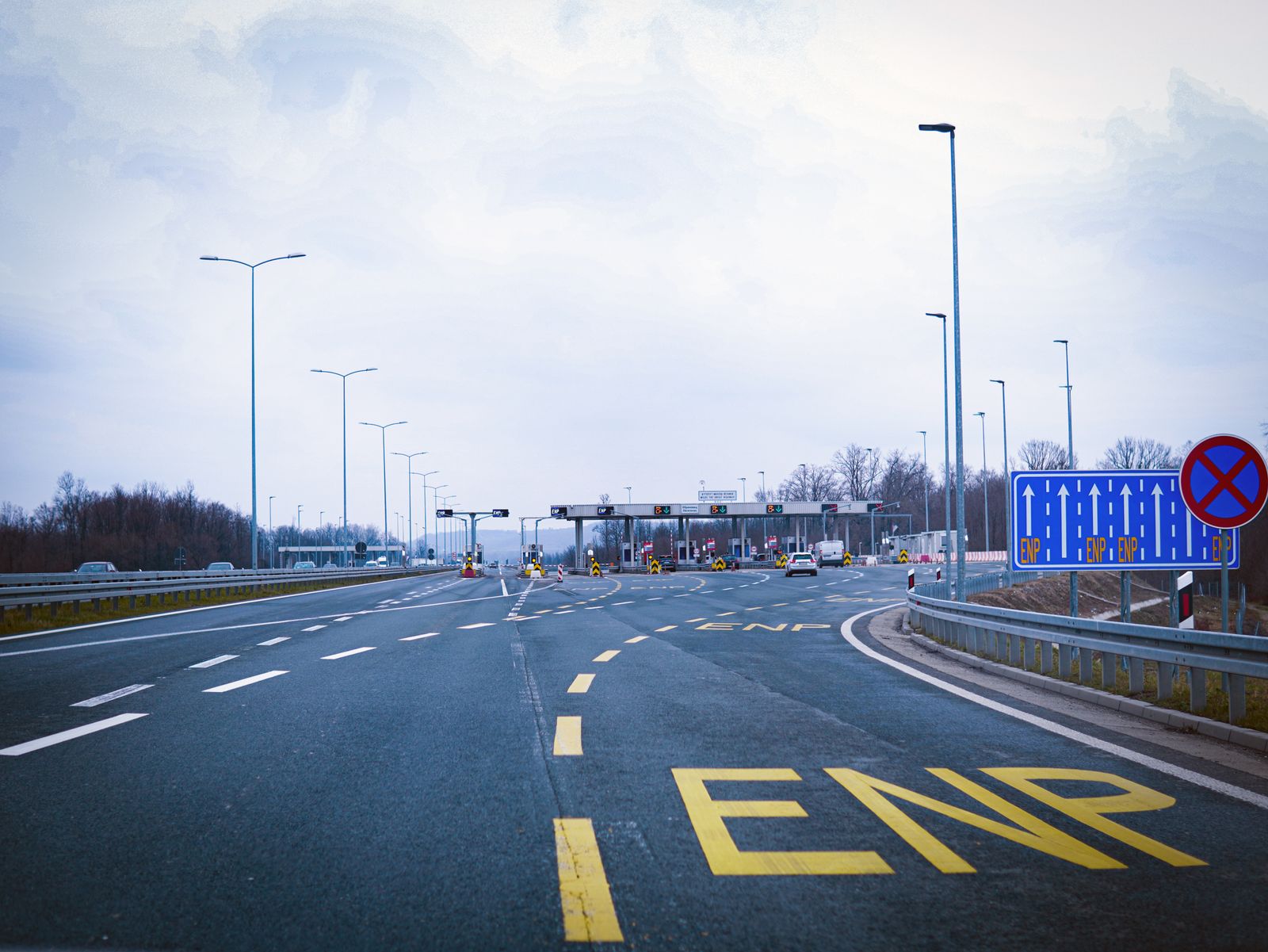
Driving in Italy is easy. Its toll system confuses almost every first-timer: booths, colour-coded lanes, cards with odd names, and then the ZTL in the cities, which is a different problem entirely and catches people out worse than any toll ever will. Here’s how Italy’s toll roads work, so you pay the right way and don’t get a fine that shows up months after your trip.
How the autostrada tolls work
Italy’s motorways, the autostrade, are mostly toll roads. The usual system is ticket-based: you take a ticket as you enter and pay when you exit, based on the distance driven. For a standard car, budget roughly €7 to €10 per 100 km. The exact rate depends on the stretch, the vehicle class, and which company runs that section of road, since Italy’s motorways are split between several private operators, not one.
A few stretches use a fixed toll instead of the ticket system, but take-a-ticket-pay-on-exit is what you’ll meet most of the time. Keep the entry ticket somewhere safe. You need it to pay at the exit, and losing it usually means paying the maximum fare for the whole stretch.
Paying: the colour-coded lanes
This is the part that trips people up. At the toll barrier, lanes are colour-coded by payment method:
- White lane: cash or debit/credit card. The default choice if you don’t have Telepass, and the one to aim for when you’re not sure.
- Blue lane with a yellow “T”: Telepass only. You drive through without stopping, but only if the car actually has a working device fitted.
- Some lanes take more than one method. Read the overhead sign before you commit to a lane, not after.
If you don’t have Telepass, pick white. Drifting into a Telepass-only lane without the device means reversing against the traffic behind you, or talking to an attendant through the intercom to sort it out on the spot. Neither is fun with a queue building.
One note for anyone who’s read older guides: the prepaid Viacard used to be part of the white-lane mix. It’s being phased out. No new cards have been sold since 2025, and while ones already in circulation stay valid through the end of 2029, there’s no reason to go looking for one now. Card or cash covers you.
A few motorways have no barriers at all
Not every toll road in Italy works the way described above. North of Milan, the Pedemontana Lombarda motorways (A36/A59) run on a barrier-free system instead: overhead gantries read your number plate as you drive through at normal speed. No booth, no ticket, nowhere to stop and pay.
If you’re not on Telepass, you register the trip and pay it online yourself, within roughly 15 days, on the operator’s website. Miss that window and it goes to debt collection. For a rental car, the rental company settles it first and then charges you, adding an administration fee for the trouble, often weeks after you’ve flown home. It’s a small slice of the network, but it’s the one that catches out drivers who assume no booth means no charge.
Does the rental car already have Telepass?
Sometimes, and it’s worth asking rather than assuming either way. Plenty of rental companies now fit their fleet with a transponder as standard and bill you for whatever tolls you rack up once you hand the car back, usually a small daily fee on top of the toll itself. Others leave the car without one, so you’re back to the white lane.
Ask two things at the pickup desk: is a device fitted and active, and how are the tolls billed. If you’re covering real distance, say Milan to Naples, having Telepass saves a lot of stop-start at booths. For a week spent mostly parked near a beach or a historic centre, it’s rarely worth chasing.
Tolls and ZTL are not the same thing
This is the mix-up that costs people real money. A toll and a ZTL sound similar. In practice they share nothing.
- Toll (autostrada): you pay to use the motorway. Normal, expected, and the subject of everything above.
- ZTL (Zona a Traffico Limitato): restricted zones in the historic centres of cities like Rome, Florence, Milan and Siena. There’s no fee to pay here. You simply can’t enter without authorisation, and if you do, a camera catches your plate and a fine follows.
Milan adds its own Area C on top: a charge to enter the centre, running roughly 7:30am to 7:30pm on weekdays, at about €7.50 per entry. The Telepass app can pay Area C and several other cities’ ZTL access by reading your plate, even without the physical device in the car. For the fuller picture on fines, speed cameras and parking beyond tolls, our guide to driving in Italy covers the rest.
What happens if you don’t pay
Nothing happens at the barrier itself. But cameras record every exit, and if a toll goes unpaid, whether from a wrong lane, a lost ticket, or one of the barrier-free roads above, the operator traces it to whoever the car is registered to. For a rental, that means the rental company gets billed first, then you, with an administration fee stacked on top of the original toll. It lands weeks or months after the trip, long after you’d rather be dealing with it.
How to avoid surprises
- Carry some cash in case a foreign card gets rejected at the booth.
- Never enter a ZTL. Park outside the historic centre and walk in.
- For long drives, ask about a car with Telepass pre-fitted.
- Keep your entry ticket until you’ve paid and left the motorway.
- If your route passes near Milan, check whether it touches a barrier-free road before you go, so you’re not paying online days after the fact.
If you’re still planning, you can compare car rental prices in Italy and ask about a Telepass-equipped car for longer routes.
The bottom line
Italy’s toll roads come down to this: roughly €7 to €10 per 100 km on the autostrada, white lane if you don’t have Telepass, and a handful of barrier-free roads near Milan that need paying online instead of at a booth. Never confuse any of that with a ZTL. A toll is a fee. A ZTL is a ban. Get those straight and you’ll drive Italy without the fine that otherwise turns up long after you’re home.
Ready to book your car?
Compare prices, free cancellation and pay at pickup. No surprises.
View rental prices →