Toll Roads in Croatia: How They Work, What They Cost and the Slovenia Trap
Croatian toll roads explained: no vignette, distance-based charges, the A1 cost from Zagreb to Split, the new digital e-toll arriving in 2026, and the Slovenia vignette you need to buy before you cross.
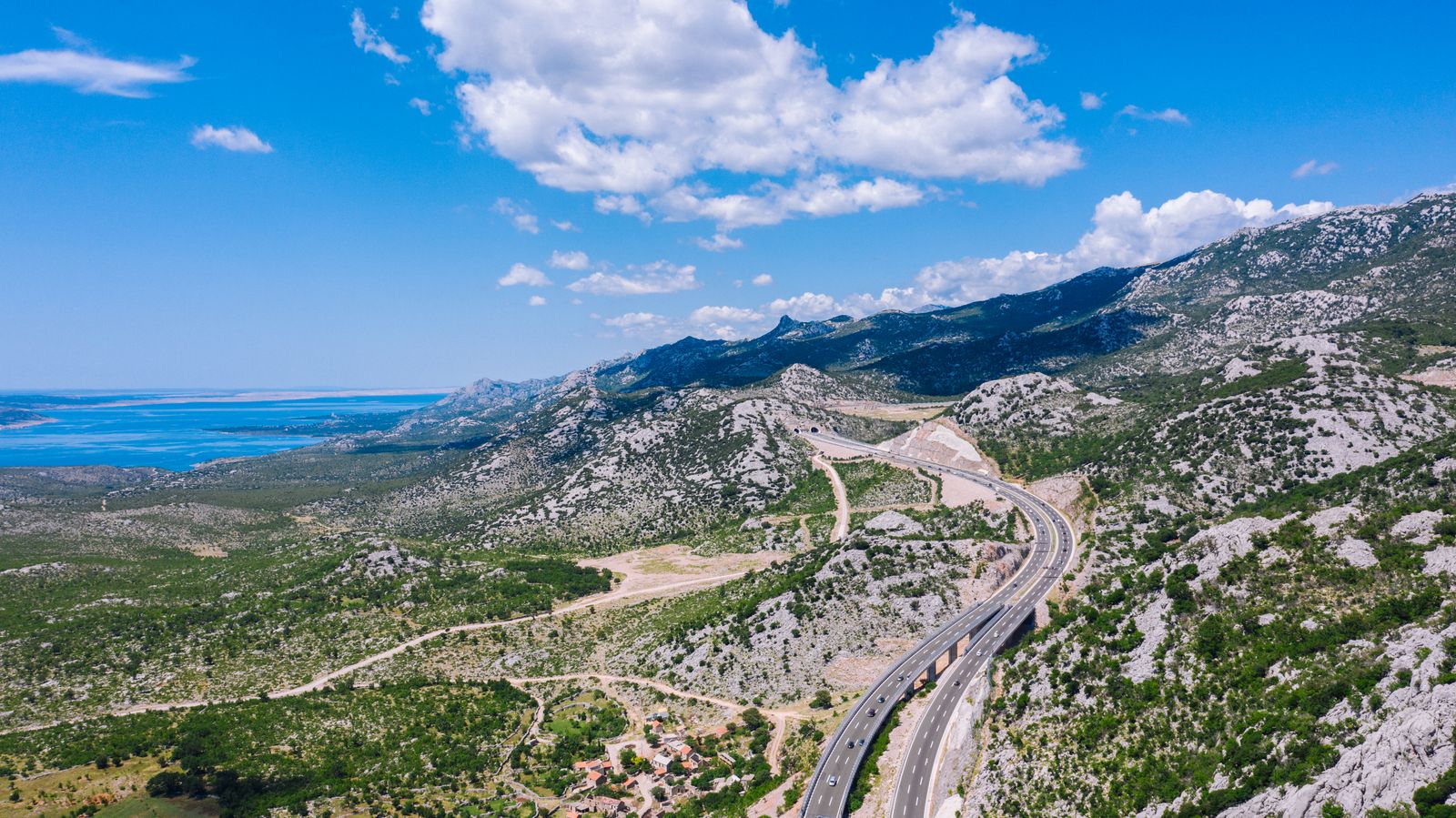
Croatia charges motorway tolls by distance — no vignette, no flat annual sticker. The system is straightforward once you understand it, but two things catch drivers by surprise: the Slovenia vignette required for the approach from western Europe, and a major change to the entire toll infrastructure arriving in 2026.
For the broader guide to driving in Croatia — islands, ferries, old-town parking and rental car rules — see driving in Croatia.
How Croatian tolls work
Croatia’s motorways use a closed ticket system. At the motorway entry, you take a ticket from the barrier. At the exit, you pay based on the distance travelled. No ticket means paying the maximum charge for the entire motorway at exit.
Payment options at the booth:
- Credit or debit card — accepted at most manned booths, the easiest option
- Cash — accepted but carry coins for any automated lanes
- ENC transponder — Croatia’s electronic toll device (see below)
The main motorway is the A1, linking Zagreb south through Zadar, Split and Ploče towards Dubrovnik. Approximate cost guide:
| Route | Approx. toll (standard car) |
|---|---|
| Zagreb – Zadar | ~€25 |
| Zagreb – Split | ~€43.90 |
| Zagreb – Dubrovnik | ~€57 |
| Per 100 km (approximate) | ~€8 |
Compare car rental deals in Croatia
ENC transponder: worth it for a longer trip
Croatia’s electronic toll device (ENC) lets you pass through dedicated lanes without stopping. Cost: approximately €15, with a permanent 21.7% discount on all tolls. For a week-long trip using mainly the motorway between Split and Dubrovnik, the maths usually does not work in your favour. For a longer coastal tour covering significant motorway distance, the discount can pay back the device cost.
Some rental companies offer ENC devices as a paid extra. If the car comes with one already fitted, ask how tolls are billed — typically debited to the rental account with a service fee applied.
The 2026 change: free-flow digital tolls
Croatia is phasing out its booth-based system and replacing it with a free-flow digital toll called Crolibertas, starting autumn 2026. Under this system, cameras read number plates at gantries and charge automatically — no barriers, no stopping.
The rollout is gradual. Full national coverage is planned by 2027. Until then, the ticket system remains on most routes. If you are travelling after autumn 2026, check the current state: foreign rental car plates must be registered or payment arranged in advance through the Crolibertas portal. The details will be similar to Portugal’s non-interoperable toll system.
The Slovenia vignette: do not miss this
If you drive to Croatia through Slovenia — the standard route from Germany, Austria or Italy — you are crossing Slovenia’s motorway network. Slovenia requires a vignette for all cars using its motorways and express roads.
Since 2022, Slovenia’s vignette is fully digital — no windscreen sticker. It is registered to your number plate.
| Duration | Price 2026 (approx.) |
|---|---|
| 7 days | €17.50 |
| 1 month | €32 |
| 1 year | €117.50 |
Buy before you cross the border, not after. The vignette is mandatory from the moment you enter a Slovenian motorway, and cameras check plates at entry points. Purchase online in advance or at petrol stations near the Slovenian border.
If you are flying to Zagreb, Split or Dubrovnik and picking up the car in Croatia, you do not need a Slovenia vignette.
Cross-border rules: Bosnia and Montenegro
Many Croatia coastal routes involve border crossings:
Bosnia-Herzegovina: the coast road south of Split once required transiting through Bosnia’s Neum corridor to reach Dubrovnik. The Pelješac Bridge (opened 2022) now bypasses this for most routes. If you do cross into Bosnia — for Mostar, for example — your rental contract must explicitly authorise the crossing and include the Green Card insurance document.
Montenegro: increasingly popular for adding Kotor or the Bay of Kotor to a Croatia itinerary. Again, requires explicit written authorisation in the rental contract. Ask the company before booking.
Both crossings require border stops (passports checked). Budget extra time — summer queues can be significant.
Parking in Dubrovnik
No toll is involved, but worth knowing: the old town in Dubrovnik is car-free. The Ilijina Glavica car park above the walls is the main option, and it fills early in summer. Book parking in advance where possible, or stay within walking distance and leave the car parked for the day.
In short
Croatian tolls: ticket at entry, pay at exit, approximately €8 per 100 km. No vignette. If driving through Slovenia, buy the digital vignette before crossing the border — it is registered to the number plate and checked automatically. From autumn 2026, Croatia’s system begins transitioning to free-flow digital tolls with no barriers. Confirm the current state before travel if your trip falls after that date.
Ready to book your car?
Compare prices, free cancellation and pay at pickup. No surprises.
View rental prices →