Dubrovnik to Split by Car: One-Way Rental, Route and What to Expect
Driving from Dubrovnik to Split: the 235 km route via Ston and the Pelješac Bridge, which stretches actually have tolls, Makarska Riviera stops, Omiš canyon, and the one-way rental.
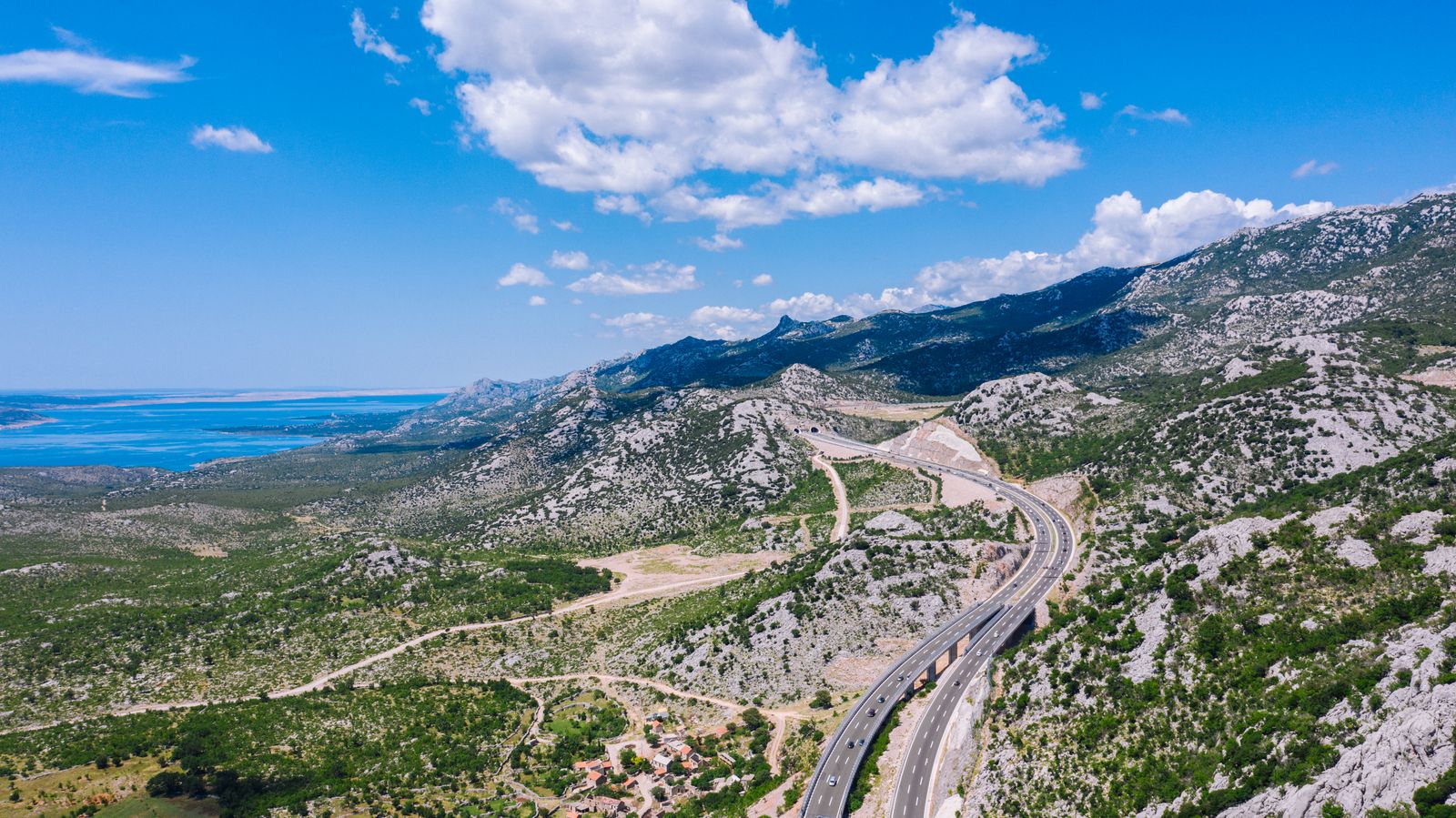
The drive from Dubrovnik to Split isn’t really one route — it’s a choice between two. Stay on the coast and you’ll pass Ston’s old walls, cross the Pelješac Bridge, and work your way up the Makarska Riviera with the sea on one side and the Biokovo mountains on the other. Cut inland onto the motorway past Ploče and you’ll be in Split in under three and a half hours, tolls included. Both are legitimate ways to do it, and which one you pick changes the trip completely — so it’s worth knowing where they actually diverge before you book.
It also happens to be the most established one-way rental corridor in the country, which works in your favour: availability is good and, unlike some routes, the drop fee usually isn’t the sting it could be.
Fast or scenic: two ways to drive it
Total distance: about 235 km either way
Direct (D8 to Ploče, then A1): 3 to 3.5 hours
Scenic (D8 the whole way): 4 to 4.5 hours without stops, a full day with them
Here’s the part that trips people up: there’s no version of this drive where you start on the A1. The motorway currently ends around Ploče — it hasn’t been built any further south yet, though a Metković-Dubrovnik extension is in the pipeline. So everyone leaving Dubrovnik, whichever way they plan to finish the trip, starts on the same road: the D8 coastal highway, through Ston and over the Pelješac Bridge.
The decision only shows up once you’re past Ploče. From there you either merge onto the A1 and let it carry you inland through tunnels straight to a Split exit — quick, tolled, and it skips the coast entirely — or you stay on the D8 and keep following the shoreline through the Makarska Riviera and Omiš. Neither is wrong; it depends on whether you’d rather arrive early or see more on the way.
From Dubrovnik to the Pelješac Bridge: Ston first
Leave Dubrovnik early if you’re travelling in summer. The city’s access roads — the D8 out toward the airport and Konavle — back up badly on July and August mornings and evenings, mostly from cruise passengers and airport transfers converging at once.
Roughly 45 minutes north, Ston sits right on the road and is an easy stop most itineraries skip entirely. Its defensive walls — often described as one of the longest fortified wall systems in Europe — climb the hillside above the old salt pans, and a short walk further is Mali Ston, where the oyster beds have been worked since Roman times. If you’ve got half an hour, it’s worth pulling off here rather than saving all your stops for the Riviera further north.
From Ston, the road continues to the Pelješac Bridge, which opened in July 2022 and was a genuine change for this route. Before it existed, the coastal road dipped through Neum — a 9 km strip of Bosnian and Herzegovinian territory — meaning a brief border crossing with passport checks in both directions. The bridge removed that step completely: the drive from Dubrovnik to Split is now entirely inside Croatia, no border formalities at all.
The bridge itself is worth slowing down for as you cross: about 2.4 km long, well above the Neretva Channel, with the Pelješac coastline visible to the south.
Makarska Riviera
The coastal strip between Ploče and Split — the Makarska Riviera — is the main reason to stay on the D8 rather than cutting inland onto the A1. The coastal road through this section passes through:
Makarska — the main town of the riviera, backed by the Biokovo mountain range. The beach is right in the centre. The promenade is lined with restaurants and bars and becomes a significant tourist scene in July–August.
Brela — consistently rated one of the most beautiful small beaches in Croatia. The Punta Rata beach has a distinctive rock formation in the water that appears on many Croatian tourism photos. Small, calm, clear water. It fills quickly in summer — arrive before 9 am for a spot.
Baska Voda, Tučepi, Podgora — smaller towns along the same stretch, each with a beach and a quieter atmosphere than Makarska.
The Biokovo mountain behind the coast road rises sharply from the sea — the height contrast between the white limestone peaks and the blue Adriatic below is what defines the visual character of this coast.
Omiš and the Cetina canyon
Just south of Split, Omiš sits at the mouth of the Cetina river canyon — a gorge where the river meets the sea between two limestone bluffs. The old pirate town is worth 30 minutes on foot, and the canyon itself has a road that follows the river inland to rapids, a small lake and a handful of restaurants serving grilled freshwater fish.
Omiš to Split is 25 km on the coastal road — the last stretch before the city.
What you’ll actually pay in tolls
Here’s the thing most guides get muddled: the D8 coastal road is free, full stop. If you stay on it the entire way — Ston, the bridge, the Makarska Riviera, Omiš — you won’t hit a single toll booth.
Tolls only enter the picture if you join the A1 near Ploče to finish the drive quickly. Croatia’s motorway system runs on ENC (Electronic Toll Collection), but as of 2026 the old booths with barriers are still in place — full barrier-free tolling isn’t due until March 2027. Cash and card lanes exist alongside the ENC-only ones; rental cars almost never carry a transponder, so use the lane marked Gotovina/Cash or the card lane and pay what’s shown on the display.
Approximate cost for the Ploče-Split A1 stretch: around €7–€10 for a standard car, depending on the exact exit. The Pelješac Bridge itself has never had a toll.
Summer traffic near Dubrovnik
Dubrovnik has a well-documented traffic problem in peak summer. The city sits at the end of a peninsula with limited road access, and the combination of cruise ship arrivals, airport transfer traffic and tourists heading to and from the Old Town creates jams on the D8 in both directions — toward the airport and Konavle, and toward Ston and the bridge.
Practical tactics:
- Leave Dubrovnik before 8 am or after 6 pm in July–August
- Do not attempt to drive into the Old Town area — the Pile Gate zone is pedestrian-only and parking near it is expensive and limited
- Park at the Ilijina Glavica cable car car park or the main city car parks north of the wall if you need to return to Dubrovnik before departing
The one-way rental
Dubrovnik to Split is the most established one-way rental corridor in Croatia, served by all major international suppliers (Sixt, Hertz, Europcar, Avis, Budget) and most local agencies.
Drop fees: because this is the busiest one-way corridor in the country, most companies build it into the base rate rather than charging a separate fee — the traffic roughly balances out in both directions, so it costs them little to reposition cars. Still, get it confirmed in writing when you book, not assumed. A handful of smaller local agencies charge a drop fee regardless, and on quieter corridors elsewhere in Croatia it can run into three figures.
Booking tips:
- Book the specific pickup location carefully — Dubrovnik Airport (DBV) is 20 km south of the city; there are also some city-centre pickup options
- Split Airport (SPU) and Split city centre are both well-served for drop-off
- One-way bookings have the same insurance and deposit conditions as standard rentals — check the excess before confirming
For the wider picture on renting in Croatia — minimum age, deposits, island ferries, what the ENC tolls actually cost on other routes — our car rental in Croatia guide covers it in more depth.
Extending the route
Split is a natural hub for extending the trip further north along the Dalmatian coast or into the islands:
North toward Šibenik and Zadar: Another 80–150 km of Dalmatian coast, with the Krka waterfalls and Kornati islands accessible from Šibenik.
Islands from Split: The car ferry to Brač/Supetar (about 50 minutes), Hvar/Stari Grad (roughly 2 hours) and Vis (2 to 2.5 hours) departs from Split port. Rental cars are allowed on the car ferries — but verify this with your rental company and book car deck space in advance in summer.
Inland to Bosnia and Herzegovina: Mostar is about 165 km from Split, mostly via the A1 toward the Nova Sela border crossing. Most Croatian rental companies permit the crossing, but you’ll need a Green Card and written cross-border authorisation from the supplier — sort it at booking, since standard tourist rental cover doesn’t automatically extend outside the EU. Our guide to car rental insurance for tourists in Europe breaks down what’s usually included and what isn’t.
If you’re planning this route, compare car rental prices in Dubrovnik with free cancellation before you commit to dates.
Ready to book your car?
Compare prices, free cancellation and pay at pickup. No surprises.
View rental prices →Frequently asked questions
How far is Dubrovnik to Split by car, and how long does it take?
Do you have to cross into Bosnia when driving from Dubrovnik to Split?
Should I take the A1 motorway or the D8 coastal road?
Are there tolls between Dubrovnik and Split?
Is a one-way rental from Dubrovnik to Split expensive?
Is Ston worth stopping at on the way?
Renting a car in Dubrovnik?
Check our Dubrovnik guide: prices, local providers and tips.
Car rental in Dubrovnik →