Road Trip Northern Spain: Coast and Mountains (5–7 Days)
Road trip northern Spain: Bilbao to Santiago, real driving times and tolls, the Camino overlap, and Basque coast vs Asturias vs Galicia compared.
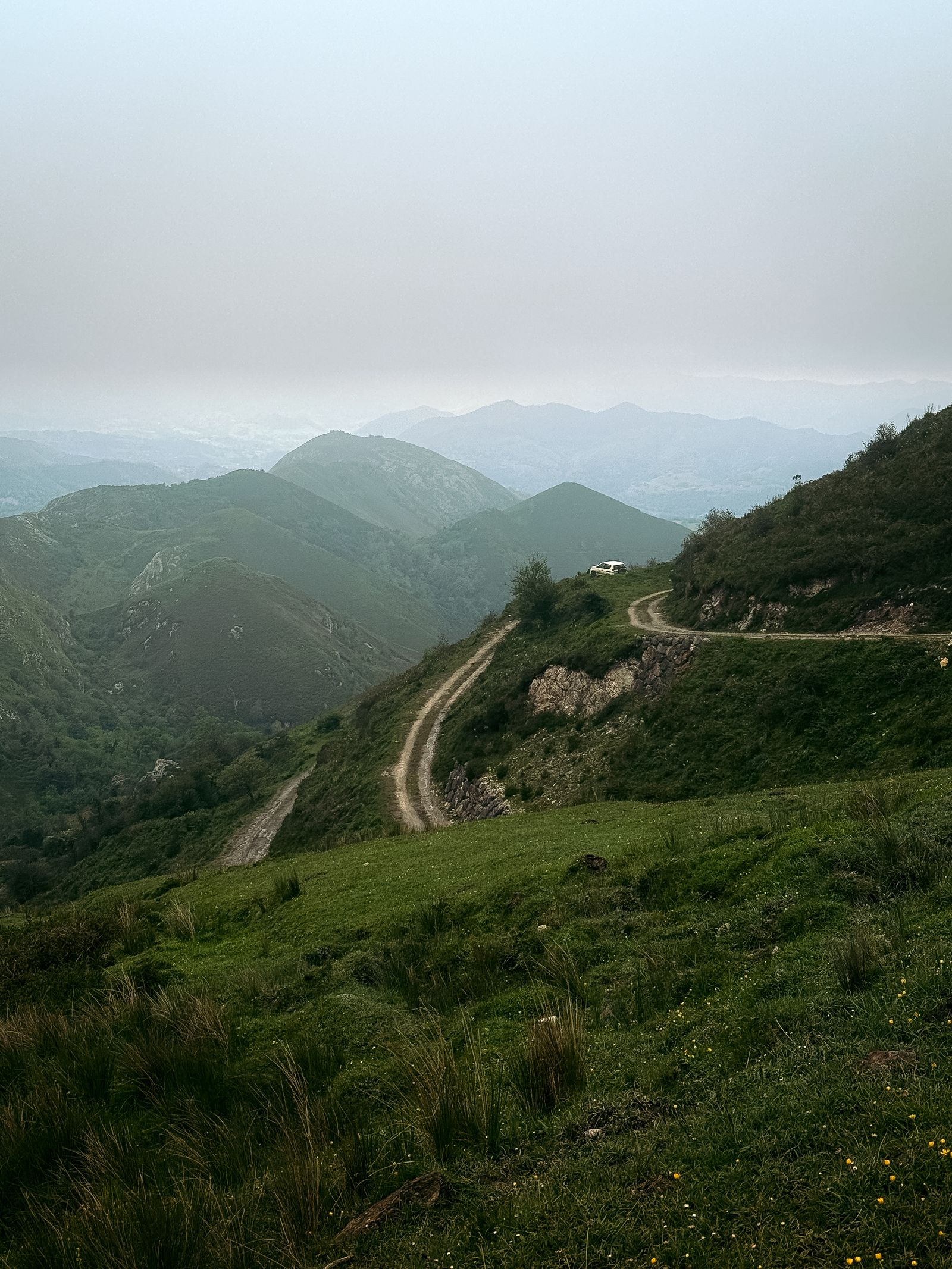
Northern Spain is often called Green Spain — España Verde — and the contrast with the south is immediate. Basque coast cliffs, Cantabrian beaches backed by mountains, a coastal pilgrimage road, cider houses, pintxos bars and a landscape that stays green year-round because it rains here, reliably, whatever the season. This isn’t a sunshine-guaranteed Mediterranean road trip. It’s something else, and for a lot of drivers, more interesting for it.
The core route runs west: Bilbao → San Sebastián → Santander → Picos de Europa → Oviedo → Santiago de Compostela. Around 600 km on the direct line, closer to 850–900 km once you add the Picos detour and the out-and-back to San Sebastián. Most travel blogs and forum threads stretch this same route to 10–14 days, or even 2–3 weeks — five to seven days works, but it means the highlights, not everything, and cutting the Picos de Europa detour is the easiest way to claw back two days if you’re tight on time.
Where to start
Bilbao has the best rental car availability and the most flight connections for this route. San Sebastián (Donostia) is also possible, but with fewer direct flights outside summer.
If you’d rather not backtrack, look at a one-way rental from Bilbao to Santiago de Compostela — both airports have decent rental desks, drop fees on this corridor are reasonable, and the alternative (driving back east after reaching Galicia) adds a full extra day or two on roads you’ve already seen. Check the rental requirements before you fly — minimum age, licence rules and deposit holds catch out plenty of first-time renters in Spain.
Compare rental cars in Bilbao and northern Spain
5–7 day itinerary
Day 1: Bilbao
Leave the car in a car park and spend the day in Bilbao on foot. The Guggenheim, the Casco Viejo and the Mercado de la Ribera are all walkable. Bilbao is a working city, not a resort, and it’s better for it — the pintxos bars in the old town are among the best in the Basque Country.
Day 2: San Sebastián
About 100 km east, roughly an hour on the AP-8 (tolled — more on that below). San Sebastián packs a remarkable concentration of good food into a small city. La Concha beach works in any weather; Parte Vieja’s pintxos bars sit on streets so narrow and so packed in summer that queuing outside is standard, not a sign you picked the wrong bar. Stay two nights if the schedule allows it.
Day 3: Santander and the Cantabrian coast
Back west, past Bilbao again, to Santander — around 200 km and roughly 2 to 2.5 hours door to door if you don’t stop. Santander has a good beach, a university-town feel, and a ferry connection to the UK that some travellers use as their actual starting point for this route instead of flying into Bilbao.
The stretch between Santander and Laredo has some of the best beaches in northern Spain — Noja, Langre, Somo. These aren’t the packed beaches of the Mediterranean; they’re wide, Atlantic-facing, and cold enough that “beach day” here often just means a walk and a coffee.
Days 4–5: Picos de Europa detour
This is the part worth adding days for. The Picos de Europa sits inland from the coast, straddling Cantabria, Asturias and León — reached via Potes, about 105 km and 1h20–1h30 from Santander on the N-621, the last stretch through the Hermida Gorge.
The Desfiladero de la Hermida, between Panes and Potes, is one of the most dramatic drives in Spain: a narrow road following the Río Deva between sheer rock walls. Give it more time than the distance suggests — you’ll want to stop.
The Fuente Dé cable car climbs about 753 metres in under four minutes, from roughly 1,090 m to a plateau at 1,823 m with views across the whole range. Go early — queues build fast from mid-morning in summer, and some seasons need advance booking online.
A note on the mountain roads here: narrow, often without a barrier on the drop side, some down to one lane with passing places. A small or compact car handles them far better than an SUV. Drive slowly — the scenery is the reason to stop, not something to glance at from a moving car. If drop-offs without a barrier make you want extra cover, it’s worth comparing rental insurance options for European trips before you book rather than adding it under pressure at the counter.
Day 6: Asturias — Oviedo and the coast
From Potes to Oviedo is around 150 km via Cangas de Onís, roughly 2 to 2.5 hours. Oviedo has a walkable historic centre, pre-Romanesque churches on the outskirts, and the Mercado El Fontán for cider (sidra asturiana) and cheese. The Asturian coast between Llanes and Ribadesella has sea stacks, natural pools carved into the rock, and fishing villages that haven’t been overrun yet.
Sidrerías (cider houses) are a cultural institution here, as in the Basque Country. The escanciado — cider poured from height into a glass held at waist level — is done by the staff, not by tourists, and produces cider with more bubbles and a glass that’s never more than a third full.
Day 7: Santiago de Compostela
Oviedo to Santiago is around 305 km on the A-8, roughly 3 to 3.5 hours. The approach into the city is gradual, then suddenly urban. The old town is UNESCO-listed, and the cathedral — with its baroque facade and the Praza do Obradoiro in front — is one of the most arresting squares in Europe. Park at the edge of the historic centre and walk in; you won’t need the car again once you’re there.
If you took a one-way rental, drop it in Santiago and fly home from its airport, like most people on this route do. If it’s a round trip out of Bilbao, the return is the same A-8 corridor in reverse — budget a full driving day, or break it with a night in Oviedo or Santander rather than pushing straight through.
Got more time? Stretching it to 10–14 days
Every blog and forum thread about this route eventually says the same thing: 5–7 days covers the highlights, 10–14 lets you actually slow down. With the extra week, the two obvious additions are La Rioja (wine country, a detour south from Bilbao or Vitoria) and Galicia’s Rías Baixas south of Santiago — sheltered inlets, seafood towns like Combarro and O Grove, and noticeably fewer visitors than the Camino-adjacent parts of the region. Both are worth the extra days if you’re not in a rush to get back to Bilbao.
The other option, if you’d rather not loop back to Bilbao at all: keep going south from Santiago on the AP-9 toll motorway through Vigo toward the Portuguese border and Porto — about 300 km, 3 hours, tolled the whole way through Galicia (Vigo–Santiago alone runs around €12–13 for a light vehicle in 2026). It turns a Spain road trip into a two-country one for not much extra driving.
Basque coast vs Asturias vs Galicia: which to prioritize
If five days is all you have, don’t try to do all three regions properly — pick two, or even one.
Basque Country (San Sebastián + Bilbao) wins on food and city life: this is one of the highest concentrations of Michelin-starred restaurants per capita anywhere in Europe, plus two very walkable, very different cities within an hour of each other. Go here if the trip is mostly about eating well and you don’t mind spending less time on empty roads.
Asturias and the Picos de Europa win on scenery and the driving itself — mountain passes, gorges, a coastline that’s wilder and less developed than the Basque one. Go here if hiking, cable cars and dramatic roads matter more than restaurant reservations.
Galicia rewards a slower, dedicated visit rather than being tacked onto the end of a rushed week — it’s the furthest region, the wettest, and the one where the best parts (Rías Baixas, Costa da Morte) sit off the direct Bilbao–Santiago line. If Galicia is the priority, consider flying into Santiago and basing there instead of driving the whole coast to reach it.
Following the Camino de Santiago by car
Part of this route runs close to the Camino del Norte, the coastal branch of the Camino de Santiago pilgrimage that follows the Basque, Cantabrian, Asturian and Galician coast — as opposed to the better-known Camino Francés, which cuts through the interior further south (Burgos, León) and doesn’t touch this route at all.
Driving it isn’t the same trip as walking it, and pilgrim forums are blunt about that: there’s no Compostela certificate for arriving by car, and the point of the Camino for most walkers is the walk itself, not the destination. What driving this corridor does give you is a good look at the towns pilgrims pass through — Guernica, Castro Urdiales, Santillana del Mar, Ribadeo — plus, on the final stretch into Santiago, actual foot traffic on the road shoulders and through town centres. Slow down and give walkers room, especially on the narrower approaches into Santiago, where the coastal and inland routes converge.
Tolls: what’s actually tolled (and what isn’t)
This trips a lot of people up. The AP-8 toll motorway only covers the Basque Country stretch — from the French border at Irún, through San Sebastián, to Bilbao, about 110 km. Tolls there run roughly €12–14 for the full stretch, cash or card at the booths, no transponder needed.
West of Bilbao, it’s free. The road continues as the A-8, a free autovía, all the way through Cantabria and into Asturias — no tolls between Bilbao and Oviedo. The only other toll you’ll hit on this route is the AP-9 in Galicia, and only if you continue toward Vigo or the Portuguese border beyond Santiago.
If you want to skip the Basque tolls entirely, the N-634 (N-632 in some sections) runs free, closer to the coast, through villages and towns — slower, but a more direct look at the landscape. Mixing both works well: AP-8 when you want distance covered quickly, N-634 when you want to stop.
Weather and when to go
Pack waterproofs regardless of month — this is Atlantic Spain, not the Mediterranean, and there’s no dry season here the way there is further south. July and August are the driest and warmest months, but they’re also the busiest and most expensive, and afternoon showers still happen. May–June and September thin out the crowds, keep prices down, and still give you a reasonable run of dry days.
Winter isn’t off the table, but the Picos de Europa passes can close or turn genuinely dangerous with snow and ice, and fog at altitude can cut visibility to almost nothing even outside winter. Check the forecast before driving up to Fuente Dé or through the Hermida Gorge, whatever month you go.
What makes this route different
Most visitors to Spain see the south or the islands — hot, dry, Mediterranean. The north runs on different rules: the food culture is more serious, the landscape is maritime and moody rather than sun-bleached, and driving here means sharing some of the same roads and towns as people walking to Santiago on foot, which gives the trip a bit more weight than a standard coastal drive.
The car isn’t optional — the best of northern Spain is spread out, coastal and mountainous in a way no train line reaches properly. But on this route, the driving is as much the point as any single stop.
Ready to book your car?
Compare prices, free cancellation and pay at pickup. No surprises.
View rental prices →