How to Get Around the Amalfi Coast: Car, Bus or Ferry?
How to get around the Amalfi Coast: car vs SITA bus vs ferry, ZTL rules and fines, targa alterna, where to park, and the strategy that saves you stress.
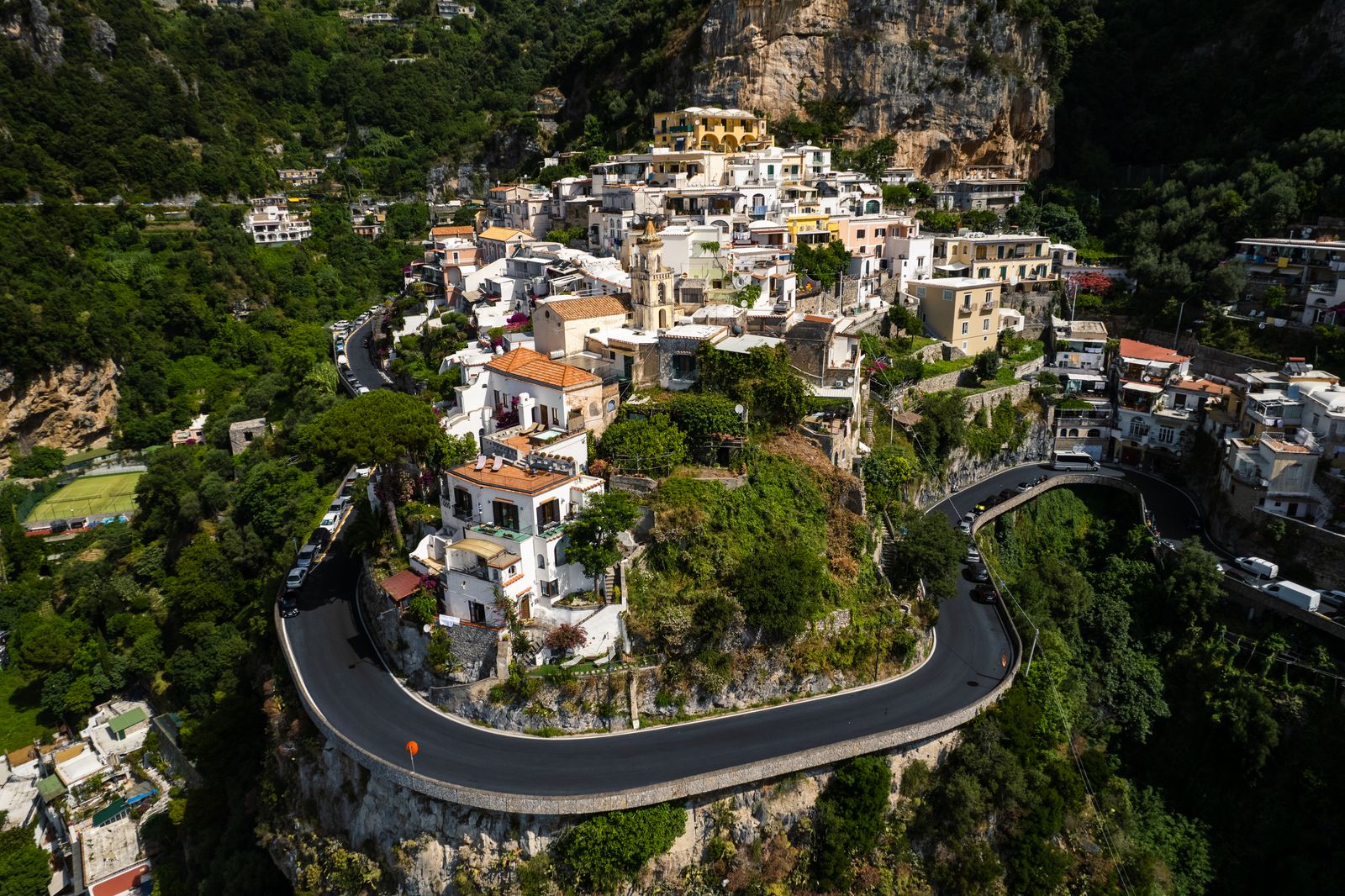
The Amalfi Coast is one of the most beautiful drives in the world, and one of the most stressful. A single cliff-hugging road, the SS163, threads all the towns together, and in summer it’s packed with buses, scooters and drivers reversing out of hairpins they misjudged. Whether you should drive it, take the bus, or hop on a ferry depends on how you plan your trip. Here’s how to get around without losing a day to traffic, or a fine to a camera you never saw.
The one road: the SS163 Amalfitana
Everything runs along the SS163, the coastal road linking Vietri sul Mare, Amalfi, Positano and on towards Sorrento. It’s spectacular and slow, with barely enough width for two coaches to pass on some bends. In high season, roughly June to September, it clogs badly, and parking in the famous towns is scarce and expensive.
That single fact shapes every decision below.
ZTL zones: which towns, and how the fine reaches you
Several towns along the coast enforce ZTL (Zona a Traffico Limitato) restrictions: a resident-only zone read by cameras, not a barrier or a guard, so nothing stops you the moment you cross it. Positano and Ravello are the strictest, with their historic centres closed to unauthorised traffic for most of the day rather than a narrow midday window. The exact hours are set, and revised, by each town’s own ordinance, so check current signage or ask your hotel instead of trusting a fixed cutoff from a blog post. Amalfi restricts its centre mainly during the busiest daytime and early-evening hours. Praiano has no ZTL at all, which is one reason it works so well as a base (more on that below).
There’s no coast-wide permit. Authorisation valid for Amalfi doesn’t cover Positano, and vice versa. If your hotel sits inside a ZTL, ask in advance whether they can register your plate. It’s usually a single authorised entry and exit, not free movement for the length of your stay.
Cross one anyway and the process is slower than most people expect. The rental company charges its own admin fee, commonly €30-60, fairly soon after being notified. The municipal fine follows separately, commonly €80-160 on this stretch of coast, and Italian authorities can take up to 360 days after the rental company hands over your details to mail it. Expect the letter as late as ten or eleven months after the trip; nothing has gone wrong, that’s just how the timeline works. We break down how that notification chain works nationwide in a separate guide, worth reading before you pick up the keys.
The rule everyone misses: targa alterna
There’s a second restriction that catches out even careful drivers, and it has nothing to do with ZTL cameras. Targa alterna is an odd/even licence plate rule on the SS163 between Vietri sul Mare and Positano: even days allow only odd-ending plates, odd days only even-ending ones, typically from around 10:00 to 18:00. It isn’t a blanket summer rule, either. For 2026 it applies daily over Easter week (30 March to 6 April) and 24 April to 2 May, only on weekends and public holidays from 1 June to 31 July, then daily again from 1 August to 30 September.
Residents, taxis, NCC drivers, disabled permit holders and emergency vehicles are always exempt, and hotel guests are exempt on their arrival and departure day if the booking can prove it. Scooters and motorcycles aren’t affected at all. If your plate lands on the wrong day, the inland detour via the Chiunzi Pass or the SS366 through Agerola isn’t covered by the restriction: slower, but it works. Check your plate ending against the calendar before a day trip in these windows. It’s an easy detail to forget with everything else the road demands of your attention.
The smart strategy: park once, ride the rest
The approach that saves the most stress: leave the car at an accessible point and use buses or ferries to hop between the towns.
- Salerno: inexpensive parking, roughly €5-8/day near the port and Piazza della Concordia, then a Travelmar ferry to Amalfi (about 35 minutes, around €10), Positano (about an hour, around €12) or Capri.
- Sorrento: park in a garage, from a couple of euros an hour, and take the SITA bus or a hydrofoil.
- Praiano: no ZTL, and parking that actually exists. Blue-line street spaces run about €2/hour, and the one garage (La Praia, a walk down toward the beach) charges around €3/hour. It sits centrally on the SS163, about 15 minutes from Positano and 25 from Amalfi by bus, an underrated base for exactly this reason.
This way you get the views without circling for a space or gambling on a camera you didn’t clock.
Getting around without a car
The SITA bus is the coast’s lifeline. A single Salerno-Amalfi ticket runs about €2.80-3 for the roughly 75-minute ride, with frequent departures in peak season, though frequent doesn’t mean comfortable: standing room only is normal by early afternoon, and a full bus sometimes just doesn’t stop for you. Buy tickets before boarding, from a tabacchi or bar displaying the SITA sign, never on the bus itself. Services stop for the night, so a late dinner in the next town over means a taxi back. Covering the whole coast over a day or two? The COSTIERASITA pass, around €10 for 24 hours and unlimited across the whole network including Sorrento and Ravello, usually beats paying leg by leg.
Ferries are the coast’s best-kept secret for the warmer months, roughly April to October. Travelmar, NLG and a couple of smaller operators connect Salerno, Vietri, Amalfi, Positano, Praiano, Minori, Maiori, Cetara, Sorrento and Capri for somewhere around €9-15 a leg depending on distance. They’re faster than the bus, skip the road entirely, and hand you the coast from the water. For town-to-town hops in summer, it’s often the best option there is. Book ahead in August: the popular midday departures sell out.
Taxis fill the gap once the buses stop, at a real cost. Positano to Amalfi runs around €120-130, Amalfi to Ravello closer to €40. Fine for a one-off late return, a bad idea as a daily plan.
How much coast to see in a day
One thing regulars on Amalfi Coast forums repeat more than any single transport tip: don’t try to see the whole coast from one base in a single day. Positano, Amalfi and Ravello each reward unhurried time, and the road and the ferries between them run slower than the map suggests once August traffic and full boats get factored in. Pick one or two towns as the actual point of the day, and let the rest be a scenic pass-through, not a checklist.
So, should you rent a car at all?
- Yes, if you want to explore beyond the main towns: inland villages, Ravello, or arriving and leaving the wider region on your own schedule. Base yourself somewhere with parking (Praiano, Salerno, Sorrento), stay out of the ZTL towns during restricted hours, and check the targa alterna calendar before a peak-season drive.
- Not really, if your trip is only the headline towns in peak summer. The bus and ferry are less stressful than the SS163, and you won’t need to think about either restriction at all.
If a car suits the rest of your Italy trip, compare rental prices and book flexibly, then lean on buses and ferries for the town-to-town hops.
The bottom line
On the Amalfi Coast, the winning move is rarely “drive everywhere.” Park the car somewhere sensible: Praiano, Salerno or Sorrento. Stay out of Positano and Ravello’s restricted hours, watch the targa alterna calendar if you’re driving in peak season, and lean on the SITA bus and ferries to move between towns. You’ll see more, stress less, and skip the fines both sets of cameras hand out all summer.
Ready to book your car?
Compare prices, free cancellation and pay at pickup. No surprises.
View rental prices →