Driving in Iceland: The Practical Road Trip Guide
Driving in Iceland: the Ring Road, F-roads, the one toll, weather, fuel, and the insurance that keeps you safe and fine-free.
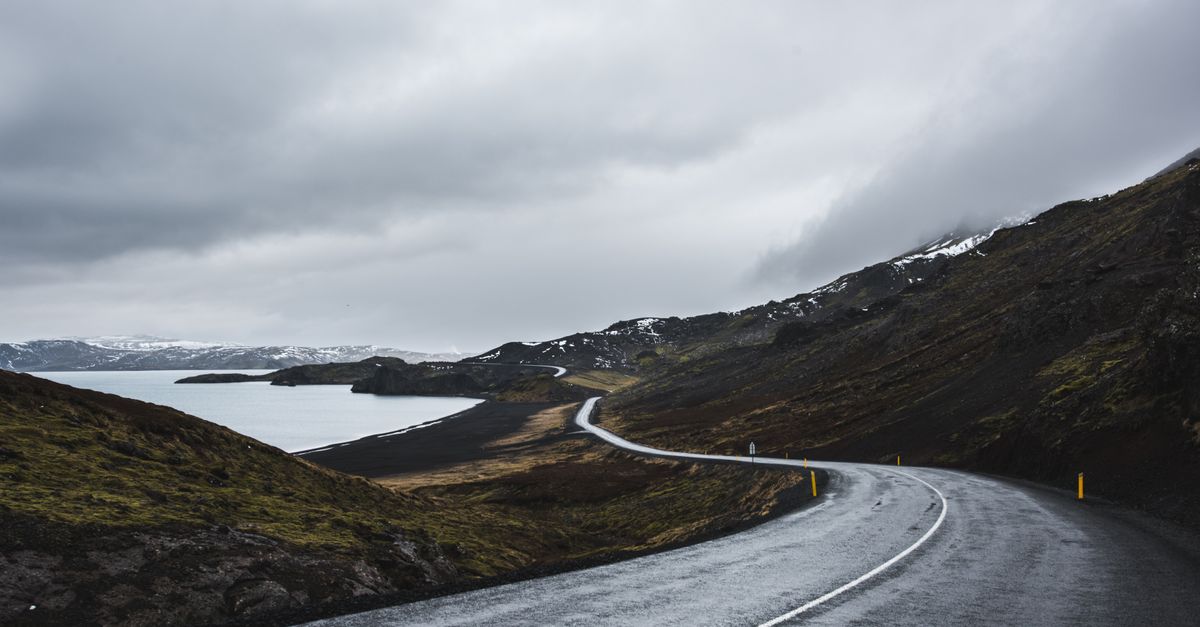
A rental car is the difference between glimpsing three waterfalls from a tour-bus window and pulling over at the fourth one because nobody else is there. Iceland was built for self-drive travel: the headline sights are strung around the coast, buses barely reach them, and the best moments tend to happen on a detour you decide on yourself. Here’s what actually matters before you turn the key.
The Ring Road is your spine
Route 1, the Ring Road, loops the whole island in about 1,320 km. It’s almost entirely paved, two lanes, and it links most of the big stops: Þingvellir and the Golden Circle, the south-coast waterfalls Seljalandsfoss and Skógafoss, the glacier lagoon at Jökulsárlón, the quiet eastern fjords, and the geothermal strangeness around Mývatn up north.
You can circle it in a long weekend. You’ll regret it. Give yourself 7 days minimum, 10 if you can, so you’re stopping when something is worth stopping for instead of watching the clock. Distances lie here — the south coast alone swallows a full day once you account for every “wait, pull over” moment.
A few things Route 1 will throw at you:
- Single-lane bridges (marked einbreið brú). Whoever reaches it first goes; the other car waits in the pullout. Don’t sprint for it.
- Blind crests (blindhæð) where oncoming traffic is invisible until the last second. Ease off.
- One-lane tunnels in the east and Westfjords, with marked pullouts (M) for the car that has to yield.
- Sheep. They graze the verge and bolt at the worst possible instant. If a lamb is on one side and the ewe on the other, assume they’ll reunite directly in front of your bumper.
F-roads and the highlands: 4x4 only, summer only
Anything starting with F — F35 Kjölur, F26 Sprengisandur, F206 to Landmannalaugar — is a mountain road, and the rules aren’t suggestions:
- You need a genuine 4x4. A two-wheel-drive car on an F-road voids your insurance on the spot, and rental companies do check.
- F-roads are shut all winter and open only once the highlands thaw — often not until mid-to-late June, sometimes July. Dates move year to year, so check road.is before you commit to a route.
- Many have unbridged river crossings. Glacial rivers swell through the day as the ice melts, the riverbed shifts, and a stalled engine in moving water ends the trip — water damage is never covered, so it ends your wallet too. Never forded a river? Watch a similar vehicle cross first, or don’t cross.
Driving off the marked road or track — onto moss, a beach, a riverbed, or “just over there for the photo” — is illegal anywhere in Iceland. Fines are heavy, and the moss you’d flatten takes decades to grow back. Stay on the track.
Tolls: there’s only one
Iceland barely has tolls. There’s exactly one on the Ring Road: Vaðlaheiðargöng, a long tunnel near Akureyri in the north that skips a steep, weather-exposed mountain pass. There’s no booth — you pay online at tunnel.is, and the site gives you a window of roughly a day either side of your drive to settle it. Do it; unpaid tolls turn into a surcharge on your rental.
The Hvalfjörður tunnel near Reykjavík used to charge and no longer does, so ignore older guides that tell you to budget for it.
Weather changes the plan, not the other way around
Iceland’s weather is the biggest variable in the whole trip, and it can flip inside an hour. Two things catch people out:
- Wind. Gusts here are strong enough to tear a car door off its hinges if you fling it open without a grip — there’s a reason rental contracts carve out wind door damage. Hold the door, park nose-into the wind when it’s wild, and don’t be surprised when blowing sand on the south coast’s black-sand stretches goes after your paint.
- Whiplash conditions. Fog, sideways rain, and ice can land on a bright morning. In winter, sections of Route 1 itself close.
So build the day around the forecast, not your wishlist. Two sites live on every Icelander’s phone:
- road.is — live road conditions, closures, and whether the F-roads are open.
- vedur.is — the official weather service, with wind and storm warnings.
Check both every morning. If a road is flagged red and the wind is howling, bin the plan. Nothing on the itinerary is worth driving into a closed pass.
Fuel, speed, and the practical stuff
Fuel is pricey, and stations thin out fast once you leave the southwest — especially through the eastern fjords and the central north. The habit that keeps you out of trouble: refill at half a tank, not when the needle’s near empty.
- Many pumps are unmanned and card-only, needing a card with a PIN. Warn your bank you’re travelling so the card isn’t blocked, and a prepaid fuel card from N1, Olís, or Orkan saves grief at remote stations.
- Headlights stay on at all times, day and night, year-round. It’s the law; most cars do it automatically, but confirm.
- Speed limits: 90 km/h on paved rural roads, 80 on gravel, 50 in towns. Cameras are common and fines sting.
- The legal limit is 0.02% BAC — one of the strictest in Europe, low enough that a single drink can put you over. Don’t drink and drive.
Worth lining up a few cars before you land rather than grabbing whatever’s left at Keflavík airport:
Compare car rental deals in Iceland →
Choosing the right car and insurance
For a summer Ring Road run with no highland plans, a small 2WD is fine and far cheaper. The instant you want Landmannalaugar, Þórsmörk, or any F-road, you need a real 4x4 — and in winter a 4x4 on good tyres earns its keep regardless. Our 4x4 rental guide for Iceland breaks down exactly where that line sits and what to book on each side of it.
Insurance is where Iceland stops resembling everywhere else. The basic collision waiver skips the exact things most likely to happen here:
- Gravel protection (GP) covers stone chips and a cracked windscreen from flying gravel — routine where paved road turns to gravel and behind other cars on the open road. It pays for itself.
- Sand and ash protection (SAAP) covers paint and glass stripped by windblown sand and volcanic ash, a genuine risk on the south coast and near active volcanic zones.
- Read the exclusions: river crossings, water damage, off-road driving, and wind-blown door damage are almost never covered, however much you bought. No policy insures something illegal or reckless.
A quick sanity check before you book
- Summer, sticking to the Ring Road and Golden Circle? Small 2WD plus gravel protection.
- Highlands (F-roads, Landmannalaugar)? Genuine 4x4, summer only, and study the river crossings first.
- Winter (roughly October–April)? 4x4, plan around short daylight, and accept that some routes simply won’t be open.
Match the car to the roads you’ll actually drive, add gravel cover (and sand-and-ash if you’re south or near a volcano), and you’ve handled most of what catches people out. The rest is slowing down, watching the sky, and stopping at the fourth waterfall.
Ready to book your car?
Compare prices, free cancellation and pay at pickup. No surprises.
View rental prices →