Driving in Greece: A Practical Road-Trip Guide
How driving in Greece really works: which side, the IDP, barrier tolls, mountain hairpins, parking, and the best routes from Athens to Meteora.
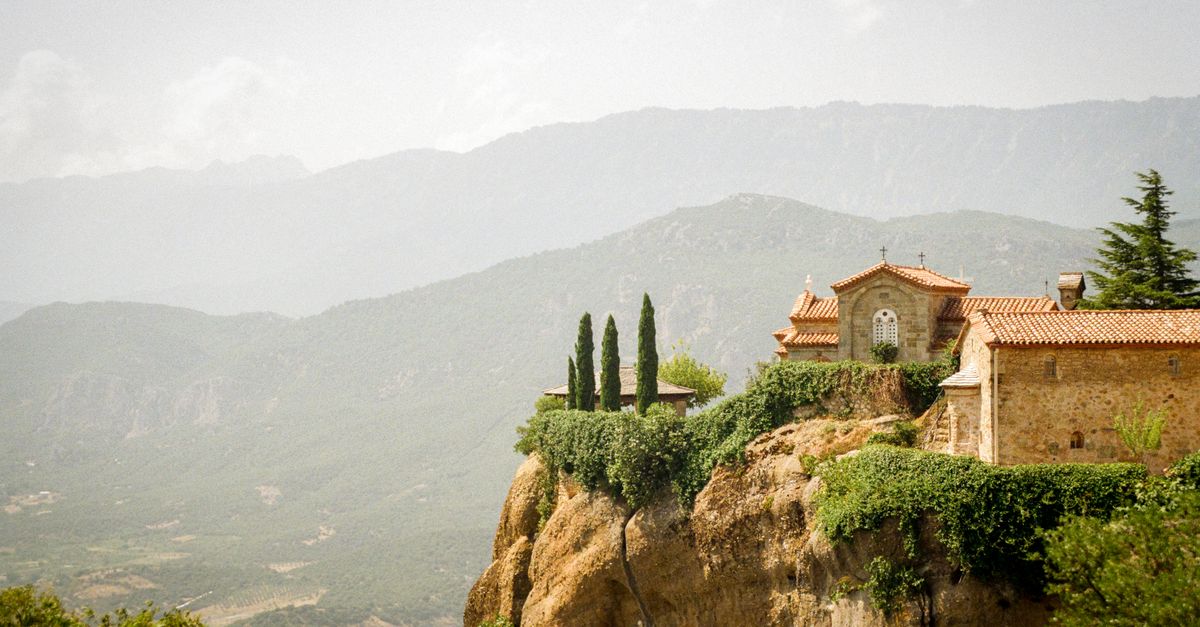
Greece rewards anyone with their own car. The bus from Kalambaka will get you to Meteora, but it won’t stop on the empty switchback where six monasteries suddenly stack up across the valley. A car lets you leave Delphi at dawn, beat the tour coaches, and still make a beach on the Gulf of Corinth by lunch. The driving is easy across the open plains and genuinely fun in the mountains, once you know how the roads here actually work.
Which side, your licence, and the IDP
You drive on the right in Greece and overtake on the left, the same as most of mainland Europe. If you’ve driven in Italy or Spain, nothing about the layout will surprise you.
- EU and EEA licences are valid as they are. Bring the physical card, not a photo on your phone.
- UK, US, Canadian and Australian licences have been legally recognised on their own since a 2021 change to Greek law, so an International Driving Permit isn’t strictly required for stays under six months. It’s still worth carrying one as a backup, since some rental desks ask for it regardless.
- Drivers from other non-EU countries need an International Driving Permit alongside their home licence. It’s cheap and you get it before you leave home.
- The minimum rental age is usually 21, and drivers under 25 often pay a young-driver surcharge. Most companies want a licence held for at least a year.
Seatbelts are mandatory front and back, small children need a proper seat, and using a handheld phone at the wheel is a fined offence. The drink-drive limit is low enough that the only safe plan is not to.
Tolls: how they actually work
The main motorways are toll roads: the A1 Athens–Thessaloniki, the A2 Egnatia Odos across the north, the A8 Olympia Odos toward Patras, and the stretches around the Corinth Canal. Greece still uses the old-fashioned barrier kind of toll, not a windscreen sticker or a number-plate scheme. You pull up to a booth, pay, and the barrier lifts.
- Booths take cash and cards, but keep some coins and small notes anyway, for the times a card lane is closed or the terminal is having a bad day.
- Tolls are charged by section, so a long drive crosses several plazas. Athens to Thessaloniki is roughly 500 km and you’ll stop at a handful of them.
- Lanes are colour-coded. The express lanes are reserved for electronic transponders most tourists don’t carry, so aim for the lanes marked for cash or card.
The motorways are well surfaced and the fastest way to cover ground. Everything scenic happens on the national and provincial roads instead, which carry no tolls and a lot more to look at.
Reading Greek traffic
Greek driving has a reputation for chaos. In practice it’s just assertive, with a set of unwritten rules that click into place once you spot them.
- The hard shoulder doubles as a passing lane. On single-carriageway roads, slower vehicles drift onto the wide shoulder so faster traffic can overtake down the middle. If a car fills your mirror, easing right is the normal courtesy here, not an admission you were crawling.
- Overtaking is committed. Expect cars to pass on borderline bends and to go for it once they start. Hold your line, don’t accelerate, and let them through.
- Horns are information, not temper. A short beep at a junction or a blind corner usually just means “I’m here.”
Speed cameras are real and increasingly common, fixed on motorways and waiting on the approach to towns where the limit drops sharply. Watch for the sign and ease off, because fines find you through the rental company later with a fee stacked on top. Since a traffic-code change from 1 January 2026, most narrow town streets carry a 30 km/h limit, with 50 km/h kept for wider one-way roads, dual carriageways and main avenues; open roads run to 90 km/h and motorways to 130, but the posted sign always wins.
Compare car rental deals across Greece on DiscoverCars →
Mountain and island roads
This is where a Greek road trip earns its keep, and where you’ll want to slow down. The roads through the Pindus mountains, around the Mani peninsula, and up to Meteora are narrow, steep, and stitched together from blind hairpins.
- Drop into a lower gear on long descents instead of riding the brakes. There’s a lot of vertical drop in these mountains, and brakes fade if you lean on them for twenty minutes straight.
- Sound your horn before a blind hairpin on a single-lane stretch. Locals do it, and it has spared many an awkward reverse.
- Watch for gravel, fallen rock, and the occasional goat parked mid-lane. In spring, meltwater runs across the tarmac; by high summer the edges can be soft.
- Village main streets are often one car wide with stone walls on both sides. Pick your moment, and don’t be shy about reversing to a passing spot when someone comes the other way. It’s routine here.
The same instincts carry over if you extend the trip to an island. Our guide to driving in Crete covers what’s different there, from rougher unpaved stretches to a toll-free road network.
Fuel and distance
Petrol stations cluster near towns and motorways but thin out fast in remote mountain country and on smaller islands. Fill up before a long rural leg, especially on a Sunday or in the off-season, when village stations keep short hours. Some of the smaller ones prefer cash, so keep a few euros on you.
The best mainland routes
The classics all run out from Athens and string together neatly.
- Delphi (about 2.5 hours from Athens). A lovely climb up through Arachova, a stone-built mountain town that’s handsome in any season. Arrive early and you’ll have the ruins more or less to yourself.
- Meteora (around 4.5 hours). The payoff drive. The road up from Kalambaka threads between the rock pillars and the clifftop monasteries, with pull-offs that exist purely for the view.
- The Peloponnese. Easily a few days on its own. Base yourself in Nafplio, loop out to ancient Mycenae and the theatre at Epidaurus, then drop south into the wild, tower-dotted Mani. The roads are quiet and the coastal stretches are some of the finest in the country.
With a long weekend, the Athens–Delphi–Meteora loop is the obvious circuit. Add the Peloponnese and a full week, and you’ve covered the heart of mainland Greece without ever queuing for a coach.
Parking and city driving
Athens traffic is heavy and the centre is a tangle of one-way streets, so a lot of visitors collect the car on the way out of the city rather than on arrival. Park on the outskirts or in a garage and take the metro into the centre.
- In towns, blue-lined bays are usually paid, white bays are free, and yellow is for residents or deliveries. Leave the yellow alone.
- Smaller towns and island ports fill up by mid-morning in July and August, so turn up earlier than feels necessary.
- Leave nothing on show in the car. It’s ordinary good sense, not a Greece-specific warning.
A small car is the right call almost everywhere: kinder on the hairpins, easier to wedge into a village square, and cheaper at the pump. Save the upgrade for long motorway days with a loaded boot. Book before you fly, compare what’s on offer at the pickup points you’ll actually use, and the rest of the trip comes down to picking the next beach.
Ready to book your car?
Compare prices, free cancellation and pay at pickup. No surprises.
View rental prices →