Driving in Crete: A Practical Road-Trip Guide
Real advice on driving in Crete: which car to rent, the rough roads to Balos, mountain hairpins, fuel, parking and how the locals drive.
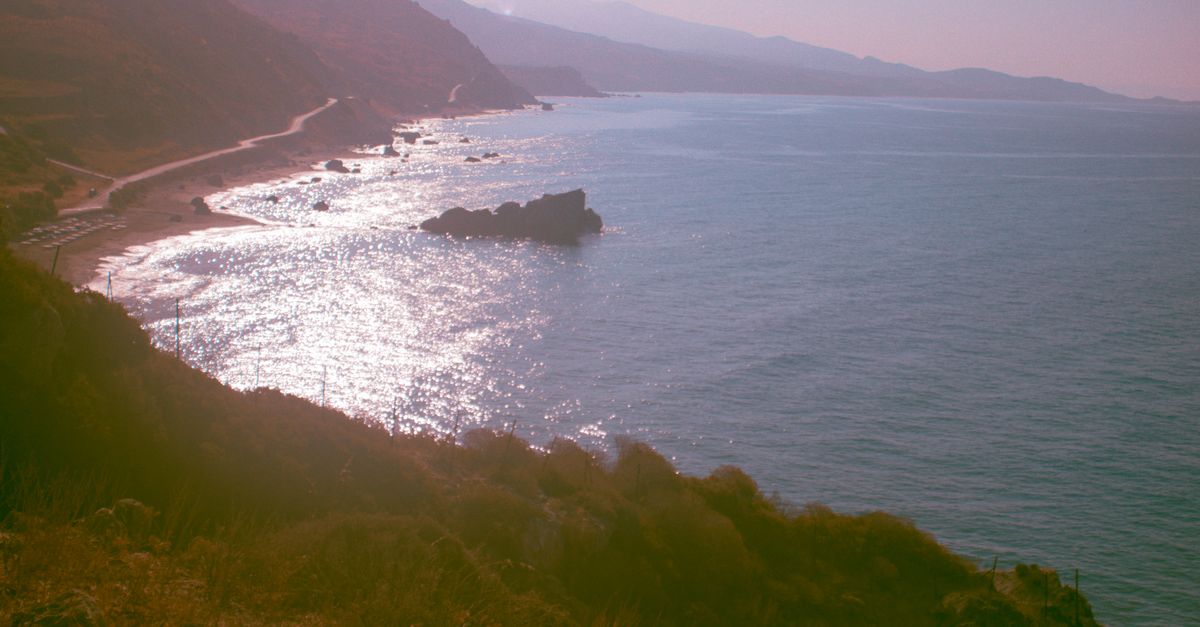
Crete is too spread out to see properly without your own wheels. The island runs about 260 km end to end, the best beaches sit at the end of dead-end roads no bus reaches, and the timetable for the buses that do exist will eat half your day. With a car you can be swimming at a near-empty cove by 9am and eating lunch in a mountain village three hours later. Here’s what actually matters once you’re behind the wheel.
The two airports and getting out of them
Most people fly into Heraklion (HER) or Chania (CHQ). Pick your base around whichever one you land at, because the drive between the two cities is roughly two hours on the highway and you don’t want to do it twice for no reason.
- Heraklion is central. Good for Knossos, the Lasithi plateau, and pushing east toward Agios Nikolaos and Elounda. The airport sits right next to the city, so you’ll be in traffic within minutes of picking up the car.
- Chania is the prettier base and puts you within reach of the wild west: Balos, Elafonissi, the Samaria Gorge. The old Venetian harbour is gorgeous but a maze; park outside the centre and walk in.
Whichever airport you use, the pickup goes faster if you’ve sorted the car in advance. Comparing rates before you fly almost always beats the desk price, and you skip the awkward upsell when you’re tired and just want the keys.
Compare car rental deals in Crete →
Which car to actually rent
You drive on the right in Greece, same as mainland Europe and the US, with the steering wheel on the left.
For the size: a small hatchback (think Toyota Aygo, VW Polo) is fine for most of Crete and a lot cheaper on fuel and parking. The exceptions are worth knowing.
- The road down to Balos lagoon (past Kissamos) is unpaved, rutted and steep for the last several kilometres. Many rental companies forbid their cars on it in the contract, and once you’re bouncing along it you’ll understand why. A small SUV with a bit of clearance makes it far less stressful, and even then plenty of people park at the top and walk the last stretch, or skip the drive and take the boat from Kissamos.
- The southern approach to Elafonissi and the roads across the Lasithi plateau are paved but narrow and patchy in places. A normal car handles them; you just go slowly.
If two of you are travelling with light luggage, don’t pay for a category you won’t use. If you’re a family of four with cases and a rough beach road on the plan, size up. Automatics are available but cost more and book out faster in summer, so reserve early if you can’t drive a manual.
The roads: fast in the north, slow everywhere else
There’s basically one fast road and a lot of beautiful slow ones.
- The north-coast highway (E75), also signed as the VOAK, links Chania, Rethymno, Heraklion and Agios Nikolaos. It’s the spine of the island and the only stretch where you’ll cover real distance quickly. There are no motorway tolls anywhere in Crete, so don’t go hunting for a toll booth or a transponder.
- Head south or into the mountains and everything changes. Roads narrow, switchback and climb. The run to the south coast — Plakias, Loutro, the Libyan Sea villages — is genuinely slow going, full of blind hairpins, so budget far more time than the map distance suggests. A 60 km mountain leg can easily take ninety minutes.
- Mountain roads also throw the occasional surprise: loose gravel, a fallen rock, a goat standing in the lane. Take blind bends wide of the centre line and ready to stop.
A word on the GPS
Google Maps and Waze both work fine on the main routes, but in the mountains they occasionally point you onto a “road” that’s really a goat track. If your route suddenly turns to dirt and the map shows a thin grey line through nowhere, trust your eyes over the app and turn back. Download offline maps for the area too, because phone signal drops out in the gorges and high villages.
How locals drive (and what to do about it)
Cretan drivers are quick and confident, and there’s one habit that throws first-timers: on the open road, slower cars drift onto the hard shoulder to let faster traffic pass, even on a single-carriageway road. It’s normal and expected here. If a car is filling your mirror, ease right onto the shoulder when it’s clearly safe and let them by; you’ll often get a little wave of thanks. Don’t feel pressured into it where the shoulder is broken up or there are pedestrians about.
A few other things worth knowing:
- Overtaking is bold. People pass on stretches you wouldn’t dream of. Leave a gap and don’t take it personally.
- Speed limits are loosely observed by locals but still enforced, with fixed cameras around: the highway runs around 90 to 100 km/h, towns 50.
- Drink-driving limits are strict and checks do happen, especially in summer near the tourist zones. After a long lunch with raki, hand someone else the keys or stay put.
- Seatbelts are mandatory front and back, and a phone in your hand will get you fined.
Fuel, parking and the small stuff
- Fuel is easy to find in and around towns, and the E75 is well served. But if you’re heading into the deep south or up to a remote plateau, fill up before you leave the main road — a single village pump that closes for the afternoon is a real possibility. Many stations are full-service, with an attendant who fills it for you. A small tip isn’t expected but is appreciated.
- Parking in the old towns of Heraklion, Chania and Rethymno is the main headache. The centres are pedestrianised or impossibly tight, so use a car park or a free spot on the edge and walk in. It’s a five-minute walk, not a hardship.
- Petrol or diesel: check which your car takes before the first fill. Diesel (“πετρέλαιο”) and unleaded (“βενζίνη”) are clearly marked at the pump, but the Greek words trip people up.
- Keep some cash on hand for the occasional rural station or beach parking attendant who doesn’t take cards.
Sample drives worth the wheel
A couple of routes that show why the car earns its keep:
- Chania → Samaria Gorge: drive up to the Omalos plateau, hike down the gorge, and here’s the catch — you finish at the coast in Agia Roumeli with no road back to your car. Take the ferry to Sougia or Chora Sfakion and a bus from there. Plan this one carefully.
- Heraklion → Lasithi plateau: a loop through windmill country and the Dikteon Cave, on roads no bus covers sensibly.
Rent the car, respect the mountain roads, let the fast guys pass, and the island opens up in a way it simply won’t from a bus seat.
Ready to book your car?
Compare prices, free cancellation and pay at pickup. No surprises.
View rental prices →Frequently asked questions
Do you drive on the left or right in Crete?
Do I need a 4x4 to drive in Crete?
Are there tolls on roads in Crete?
How long does it take to drive across Crete?
How long does it take to drive around Crete?
Is it hard to drive in Crete as a tourist?
Renting a car in Crete?
Check our Crete guide: prices, local providers and tips.
Car rental in Crete →