Road Trip in Andalusia: 7-Day Itinerary and Rental Car Tips
Road trip in Andalusia by rental car: 7-day itinerary from Seville to Granada with white villages and Ronda, plus airports, low emission zones, tolls and parking tips.
Andalusia rewards road trips. The distances between Seville, Córdoba, Granada and the white villages are reasonable, the motorways are free and the mountain roads are genuinely beautiful. The risk is trying to see everything. A week is enough for the best of it — if you use the car for connections and park it whenever you reach a city.
Which airport to fly into
Andalusia has three usable airports and the choice affects how many kilometres you add to the trip.
- Málaga (AGP) — largest selection of suppliers, usually the best prices. Right on the Costa del Sol. Easy reach of Ronda (100 km), Granada (125 km) and Seville (200 km). Good starting point for most itineraries.
- Seville (SVQ) — better if the western route is your priority: Córdoba (140 km), Cádiz, the white villages. Less choice of suppliers than Málaga.
- Granada (GRX) — small, fewer flights, fewer rental desks. Worth considering only if Granada and the Sierra Nevada are the main focus of the trip.
One option that sometimes saves money: pick up at one airport and drop off at another. A one-way rental from Málaga to Seville avoids 200 km of backtracking and can be cheaper than the round trip when you factor in fuel and time.
Compare rental car rates for Andalusia
7-day itinerary
Days 1–2: Seville
Start in Seville and leave the car parked. The Cathedral, the Alcázar, Santa Cruz, Triana and the Plaza de España are all walkable and close together. The historic centre has a low emission zone (Zona de Bajas Emisiones / ZBE) with camera enforcement — driving through it without the right vehicle permit triggers a fine that the rental company will pass on to you.
If you arrive at Seville airport, collect the car on the way out of the city rather than on arrival. You do not need it for the city itself.
Day 3: Córdoba
The drive from Seville to Córdoba is comfortable motorway — about 140 km on the A-4. Park at the edge of the old city and walk to the Mezquita, the Jewish Quarter and the Roman Bridge. The historic centre is compact and best on foot.
Days 4–5: Granada
Granada needs at least two nights if you want the Alhambra. Book tickets well in advance — they sell out regularly, especially in spring and summer. Leave the car in a car park outside the centre and walk or take a taxi to the Albaicín and the Alhambra. Traffic restrictions, steep lanes and limited parking make driving inside the centre more trouble than it is worth.
Day 6: Ronda and the white villages
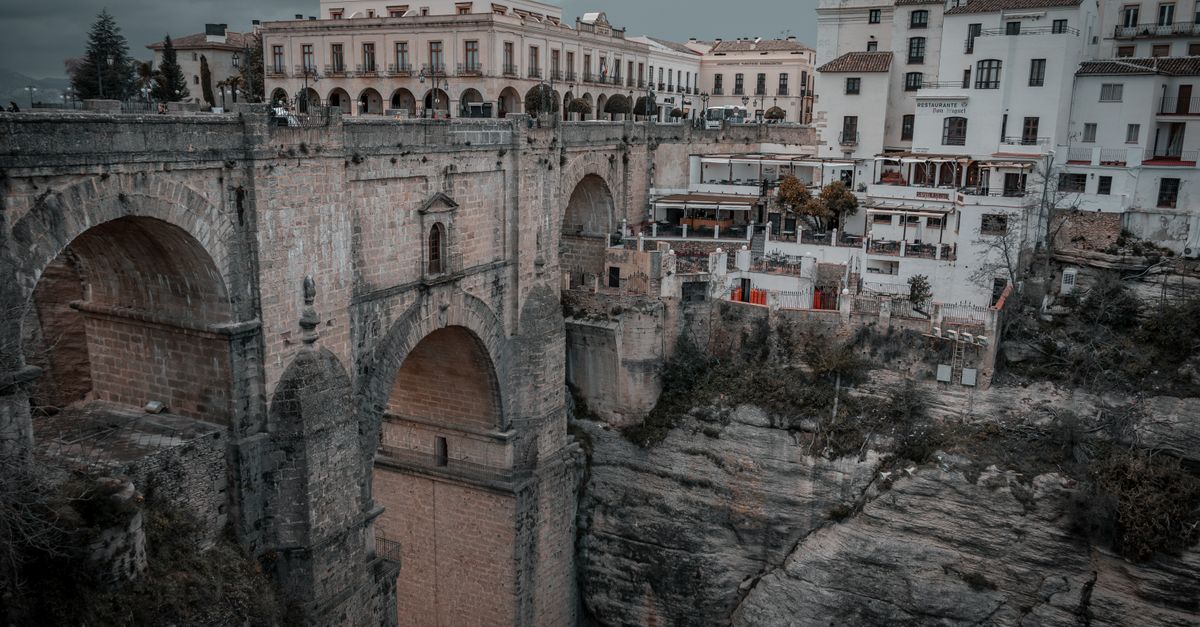
This is the day the rental car earns its place. The route through the Pueblos Blancos — Zahara de la Sierra above its reservoir, Grazalema in the natural park, Setenil de las Bodegas with its cliff-face houses, and Ronda above the gorge — is spectacular but slow. Mountain roads average well under 50 km/h and you will want to stop often. Do not pack too many stops into one day.
The A-397 from the coast up to Ronda is winding and steep but well-maintained and genuinely impressive.
Day 7: Málaga or Cádiz
Choose based on your flight and what you still want to see. Málaga is the convenient choice for returning the car at the airport. Cádiz is better if you want the Atlantic coast, the old city and the tapas culture — but it adds distance and a return trip to factor in.
With more days: add Cádiz and the Costa de la Luz with 10 days; Cabo de Gata, Úbeda and Baeza with 12 to 14.
Tolls: mostly free
Good news for the budget: the main autovías (A-roads) in Andalusia are toll-free. The A-92 across the region, the A-4 Seville–Córdoba, the A-45 Málaga–Antequera — all free. The AP-7 coastal motorway along the Costa del Sol, which used to charge tolls, is now also free. In practice you can drive around Andalusia without a toll transponder.
The only tolls you are likely to encounter are on a few specific tunnels or mountain roads. These are minor and can be paid at the booth by card.
Low emission zones: where to be careful
Three cities have low emission zones that affect rental cars:
Seville: large parts of the historic centre are restricted for through-traffic. Camera systems read number plates. If you enter without the right permit, the fine comes weeks later via the rental company.
Granada: similar zone covering the Albaicín and parts of the centre.
Málaga: the historic centre has restricted zones.
The practical solution is the same for all three: park outside the restricted area, walk or take public transport into the centre. Do not trust a GPS that routes you through the centre — it does not know whether your rental car has the right permit.
Fuel: one important detail
Spanish petrol stations use the same pumps as the rest of Europe, but the labels are in Spanish:
- Gasóleo or Diésel = diesel
- Gasolina = petrol
Do not pick up the wrong nozzle. Wrong fuel in a rental car is one of the most expensive mistakes possible and is not covered by any excess waiver.
Fuel at motorway service stations is consistently more expensive than at filling stations in towns or at supermarkets. Plan your last fill-up before the airport return — the supplier will charge a premium for fuel if the tank is not as full as when you collected the car.
Parking tips
In cities, find a car park (parking or aparcamiento) at the edge of the centre and walk in. Do not try to navigate the narrow streets of historic centres with an unfamiliar car.
In the white villages, park in the lower part of the village or at signed parking areas. The lanes are extremely narrow and steep — beautiful on foot, very stressful in a car you have to reverse back down.
Kerb colours matter: blue = paid parking (use the machine); yellow = no stopping; white = usually free but check signs. Do not leave anything visible in the car, especially at viewpoints and beach car parks.
Summer planning
In July and August the interior of Andalusia reaches 40°C or above. Seville and Córdoba regularly break those temperatures. Two practical consequences for drivers:
A dark car left in direct sun becomes very hot very quickly. Underground car parks and shaded spaces are worth the small cost. Test the air conditioning at pickup, not two hours later on a country road.
Start long drives early. The Alhambra opening times and the heat both reward a 7 am start. By the time the day gets hot, you can be back in the car with the air conditioning on heading to the next stop.
What to bring and check before you go
- Driving licence: an EU licence is sufficient for Seville, Córdoba and Granada. Non-EU travellers should check with the supplier whether an International Driving Permit is required.
- Credit card in the main driver’s name: required for the deposit at almost all rental companies.
- Check the excess: budget rates often have a high excess. Read the insurance conditions before booking rather than deciding at the counter under pressure.
- Additional driver: add them to the booking in advance if you plan to share driving. Adding at the counter costs more.
Get those points sorted and an Andalusia road trip is one of the most relaxed drives in Europe: free motorways, real variety between cities, mountains and coast, and almost no distances that feel like a chore.
Ready to book your car?
Compare prices, free cancellation and pay at pickup. No surprises.
View rental prices →